ARTIGIATO CAFE
Maximizing Time and Enhancing your Café Experience
MY ROLE
Product designer
TIMELINE
1 month
CONTRIBUATION
User experience
User interface
User research
User interview
TEAM
2 product designers
PROJECT OVERVIEW
Background
Artigiano has been shaping Vancouver’s coffee scene for over 25 years. They started as a single café on Hornby Street and have grown to 25 locations across BC and Alberta. They’re known not just for amazing coffee and latte art, but also for creating a welcoming and artful atmosphere in every café. They make all their pastries and savory items from real, local ingredients, and they even roast their own beans in Burnaby to craft unique flavor profiles. Over the years, they’ve built a loyal following of coffee lovers and earned international recognition for their baristas and dedication to the craft.
The Problem
The current setup operates strictly on a first-come, first-served basis, which often causes frustration for customers who prefer certain seating options and have no way to plan ahead.
The Estimated Results & Impact
30%+
reduction in average wait times during peak hours with reservations help distribute guest flow more evenly throughout the day
25%+
increase in customer satisfaction scores
Advance booking reduces uncertainty and improves the overall café experience.
20%+
Better visibility into reservations allows teams to prepare staffing and seating more effectively.
40%+
The reservation feature encourages more users to interact with Artigiano’s website or app.
…create a café experience that reduces wait times, ensures tables are readily available, and makes it effortless for students and remote workers to work comfortably?
How might we…
SOLUTION BREAKDOWN
The Solution in Detail
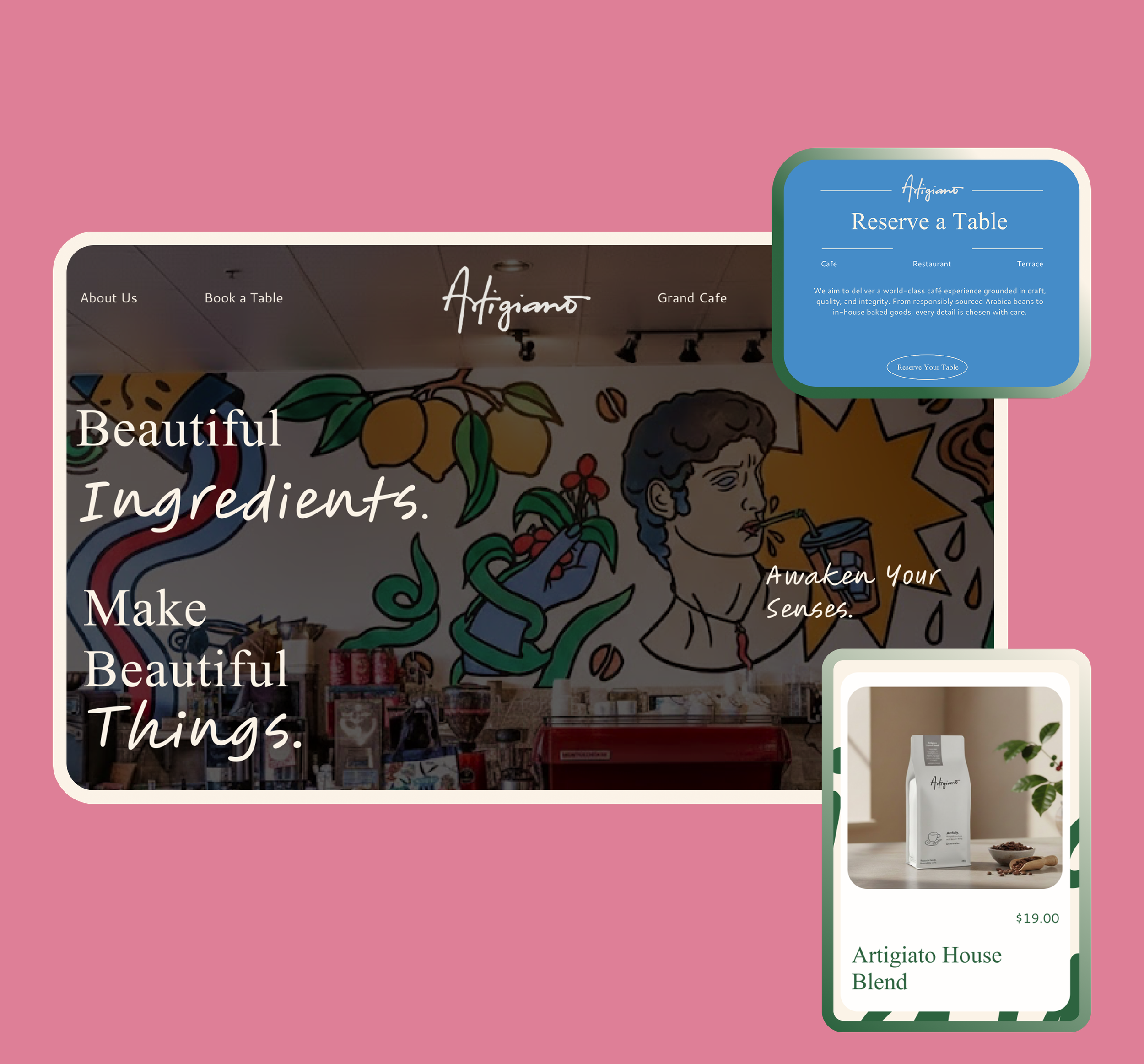
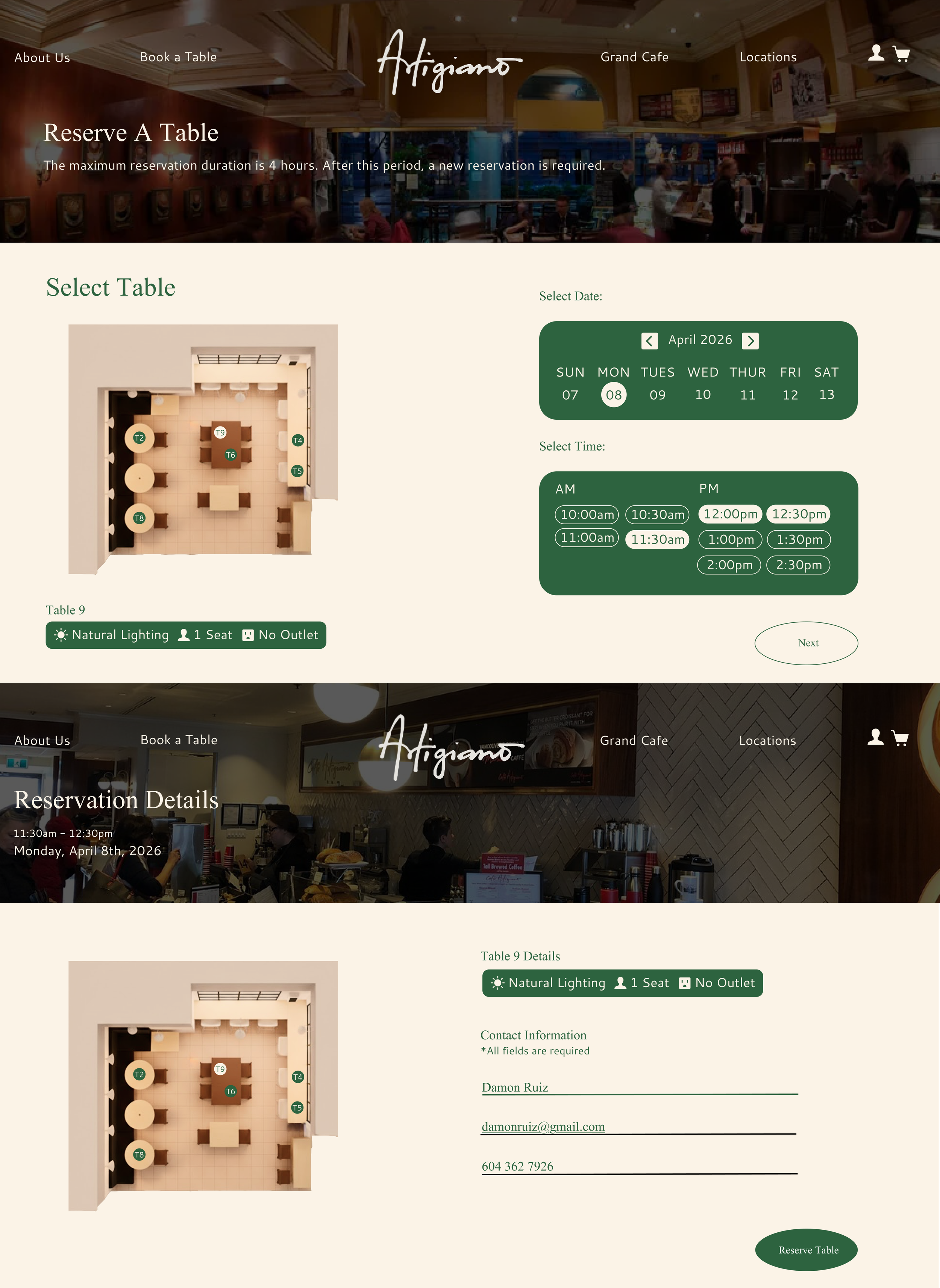
A table booking system lets users reserve a specific table online in advance. Through the Artigato’s website, users can see details for each table, including seating capacity, the availability of nearby power outlets, and access to natural sunlight.
HOW DID I START
Understanding my Users
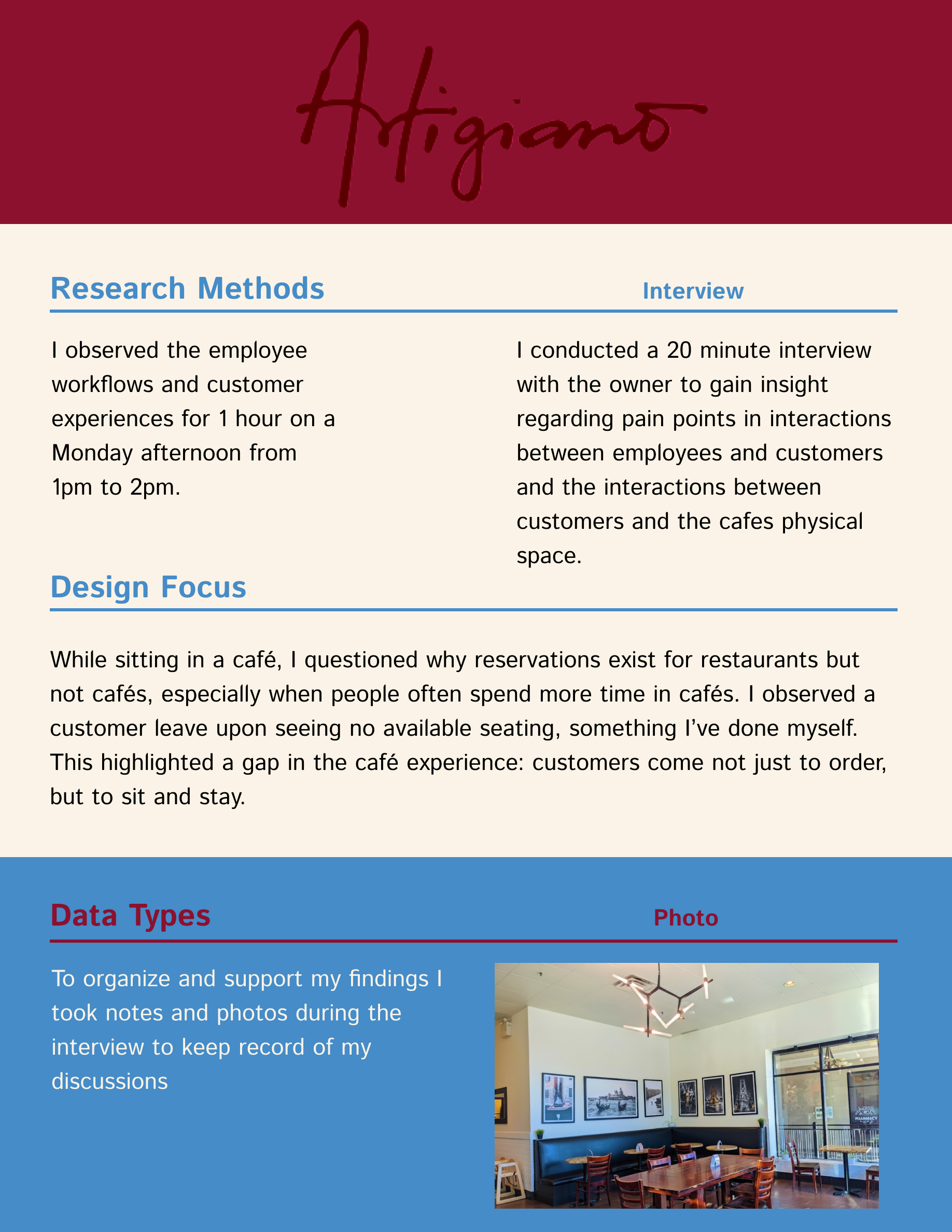
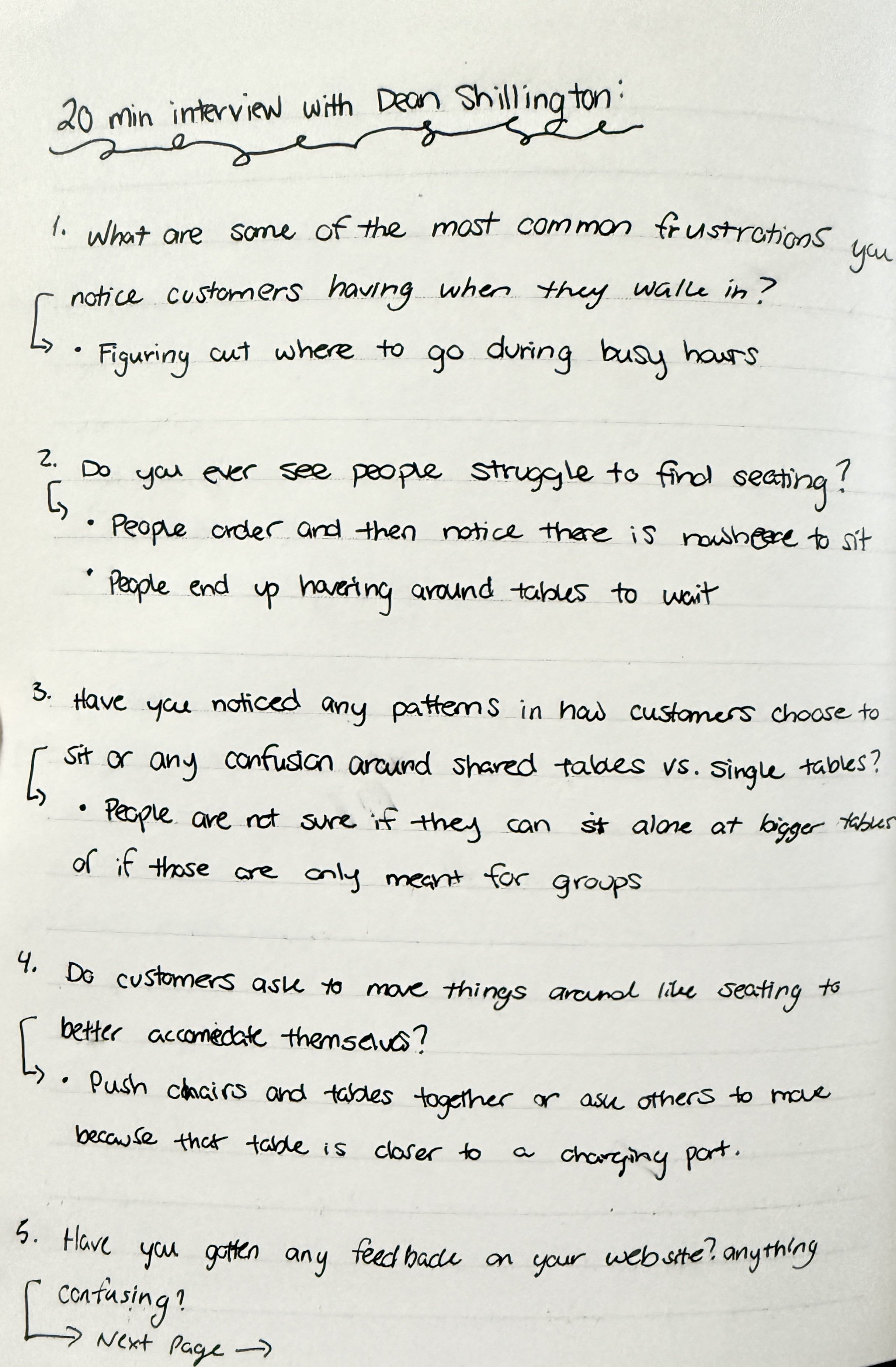
To better understand the users of the café, I visited Artigiano Café in Burnaby and spoke directly with the owner to gain insights into customer and employee interactions. I also talked with a few customers and observed both employee workflows and guest experiences to get a full picture of how the café operates.
👎 Problem
Some customers were staying for extended periods, often exceeding 2 hours with the purchase of a singular item
👎 Problem
People spend more time at cafés than restaurants, but this distinction isn’t being leveraged
👎 Problem
Café experiences often lack flexibility, making it difficult to accommodate individuals, groups, and remote workers equally well
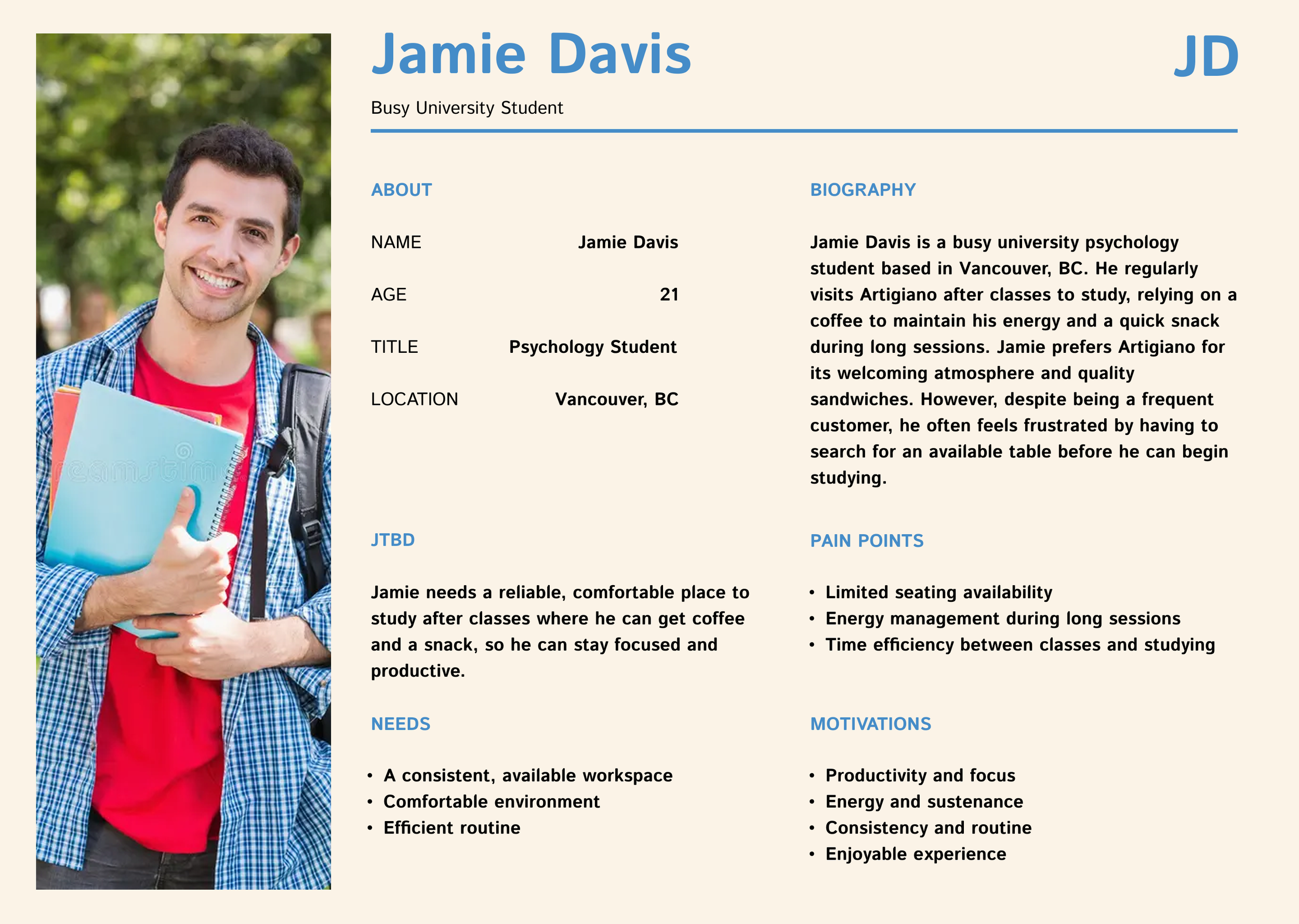
User Personas
Based on the user interviews, I created the user persona Jamie. Jamie is a busy student who spends his time studying at Artigiano after his lectures. This persona helped me identify key user pain points and better understand user needs.
RESEARCH
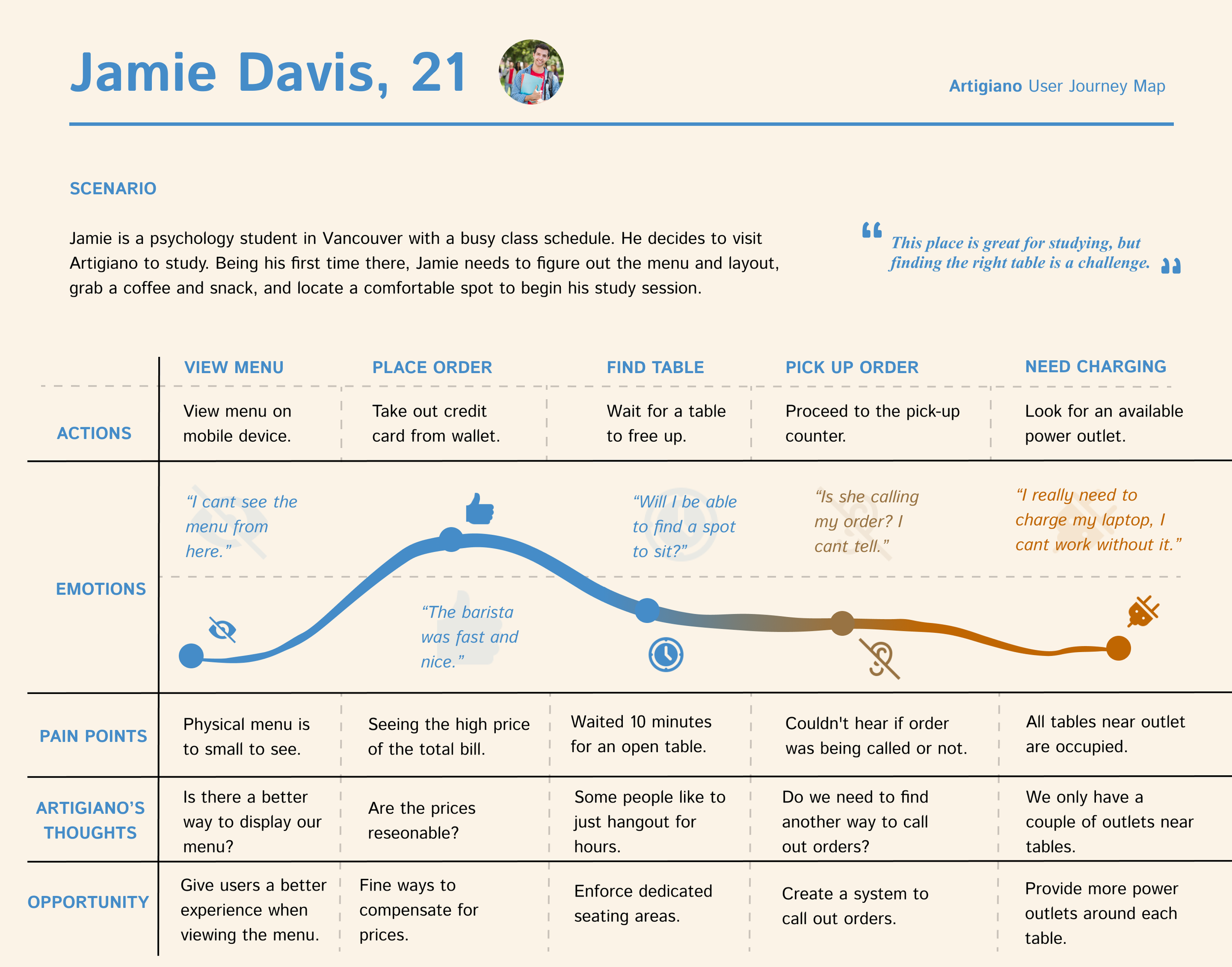
Jamie’s Journey
This user journey map illustrates Jamie’s typical visits to Artigiano. It reveals the challenges he faces at each step and highlights opportunities to enhance his study experience and make his routine smoother.
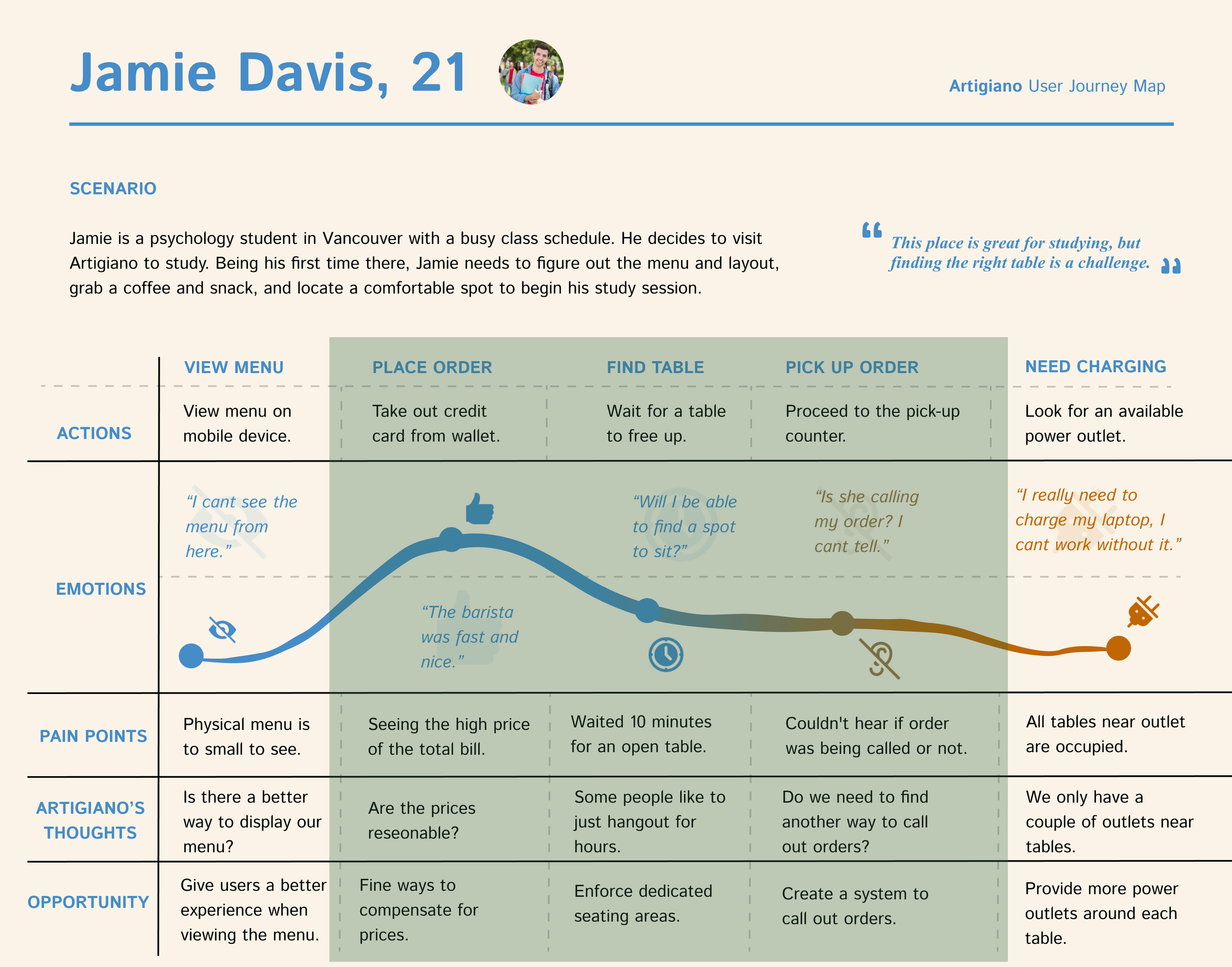
Narrowing Down on the Focus
Reviewing Jamie’s user journey map highlighted that his difficulty in finding an open table is a significant pain point. Research showed this is a frequent issue, and addressing it could also support the café’s goal of managing long customer visits.

Key Takeaways
01 — Seating Availability is a Major Friction Point
and directly impacts the overall café experience.
02 — First-time Visitors Feel Uncertain
navigating the menu and café layout, which slows down their routine.
USER TESTING
User Testing Workshop
Before entering the workshop, my initial concept was to design a table reservation system for Artigiano. However, I chose to step back from this solution to reassess my design focus and better understand what factors should be considered before moving forward. The workshop was structured around three key activities.
Through this workshop, I aimed to learn:
What users value in a café seating environment at Artigiano and how elements such as ambiance and lighting support their activities.
What motivates customers to remain seated in the café for extended periods of time.
How users select their seating and respond to spaces that are either full or available.
Additional insights and design opportunities that may have been overlooked during the initial concept phase.
Who Are These Participants?
I recruited 4 participants, all students between the ages of 17–20. Initial research showed that the primary customers who study or work at Artigiano are university students, making this group the most relevant to the research goals.
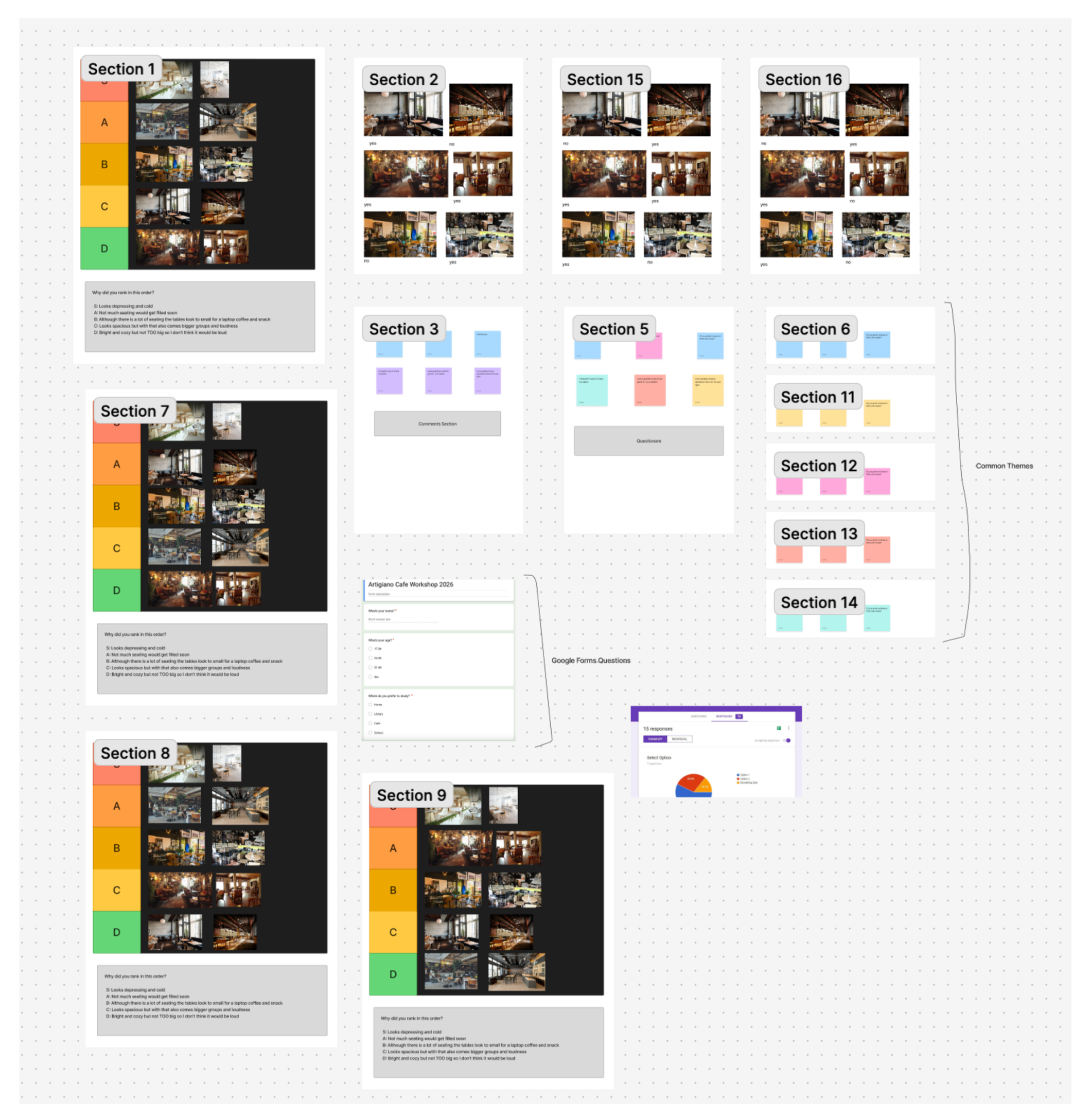
Questionare
A brief questionnaire was used to gain insight into university students and their core study needs. Questions focused on preferred study environments and the factors that influence their focus.
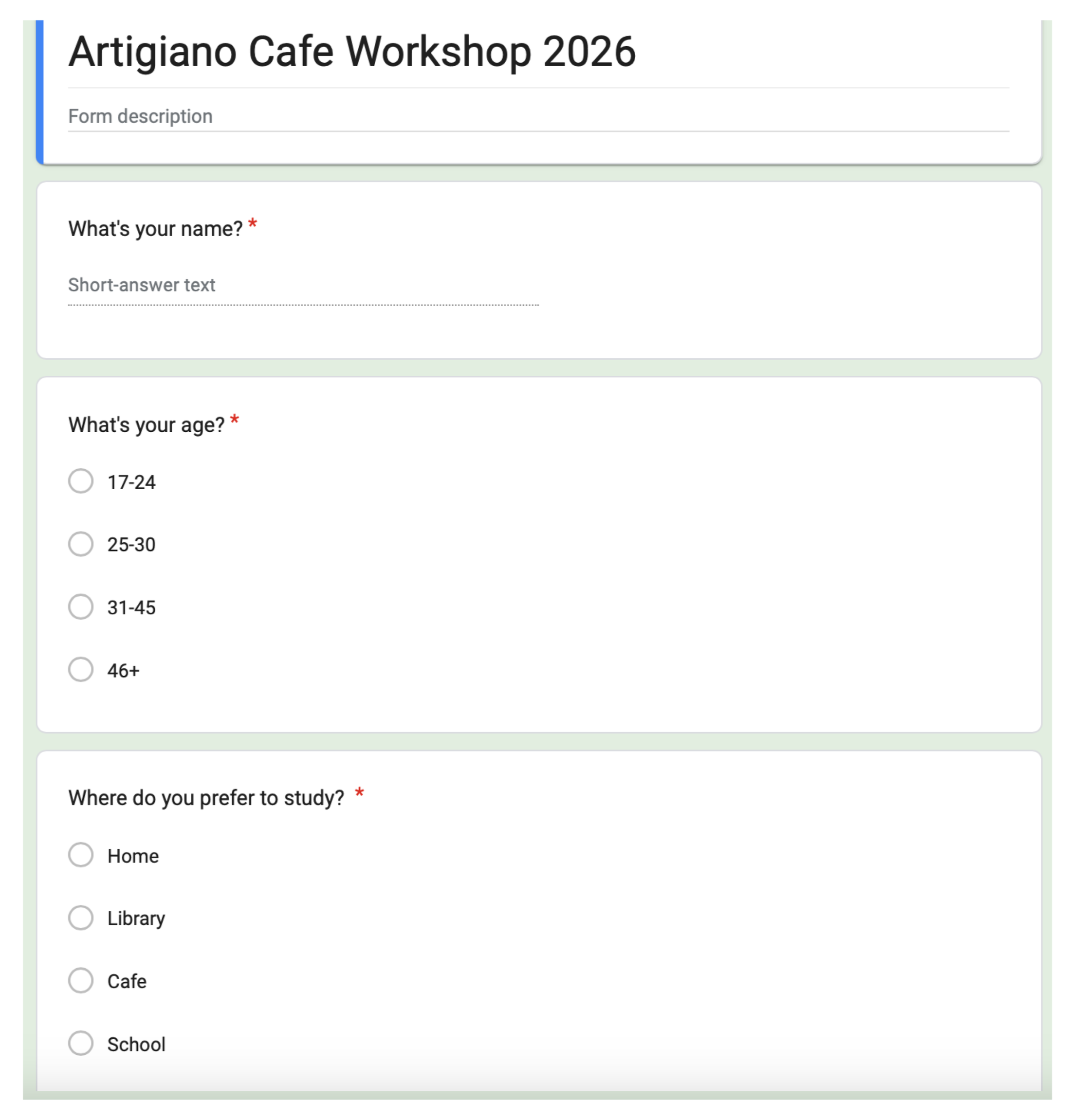
Collage Brainstorm
During this activity, participants curated images to form a mood board representing their ideal study environment. A recurring pattern emerged, with many selecting cafés or study spaces that felt cozy and featured warm, inviting tones.
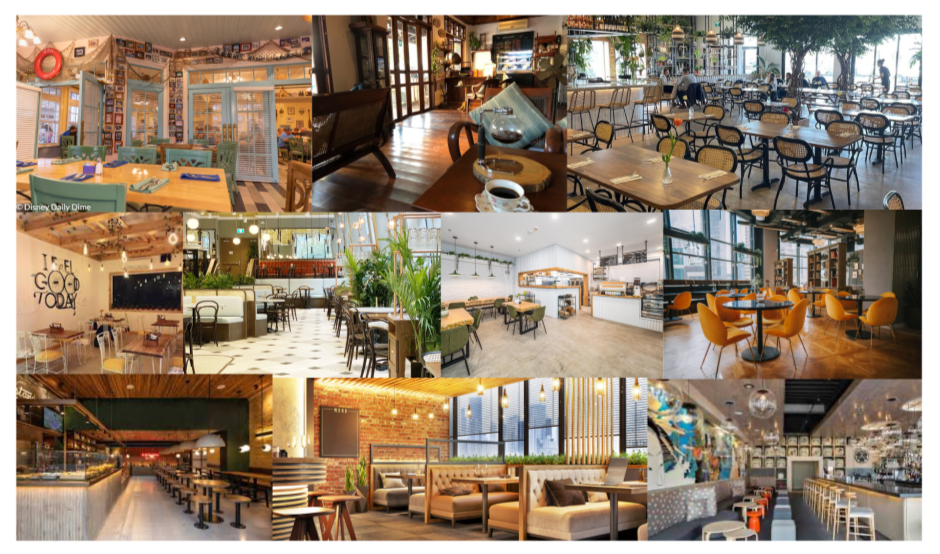
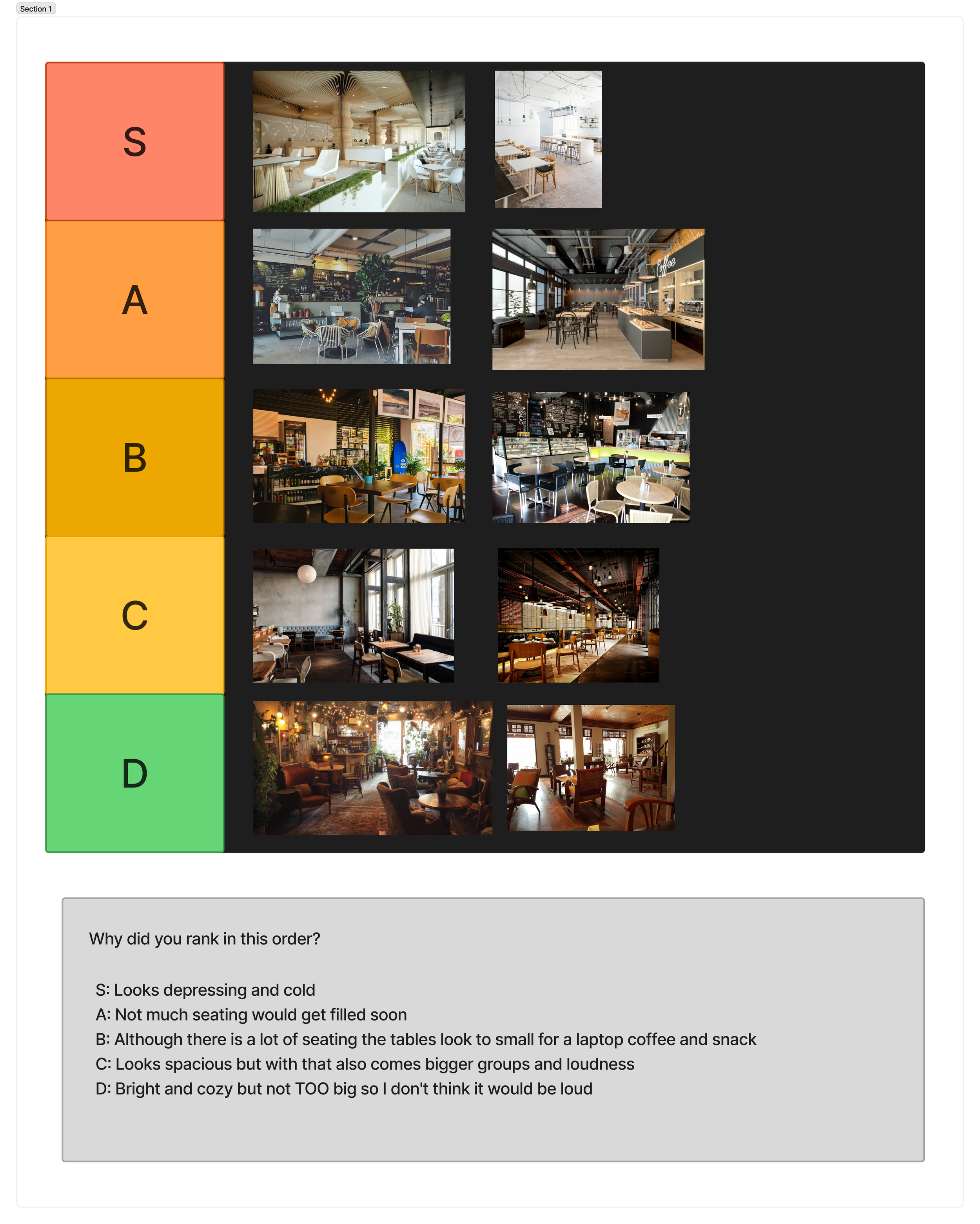
Space Ranking
Participants were asked to rank various study space images to better understand their priorities. Rankings ranged from D (best) to S (worst), and participants provided explanations below the tier list to support their choices.
Key Takeaways
01 — Effective Workshop Activity
The image-ranking tier list activity proved highly effective, as it revealed where users prefer to sit when studying individually versus in group settings.
02 — User Preferences & Behaviour
Participants preferred study spaces with minimal foot traffic while still avoiding feelings of isolation. An interesting insight was that many students primarily study with friends rather than alone.
Design Solution
Many students and remote workers at Artigiano expressed irritation about not being able to secure their preferred table for studying or working. Based on my initial observation that people often spend more time in cafés than restaurants, yet restaurants allow reservations, I chose to explore why a similar system doesn’t exist for cafés.
This led me to propose an online table booking system that allows users to reserve a specific table in advance through the Artigiano website. The system enables users to view key table details, including seating capacity, access to power outlets, and availability of natural light, helping users choose a space that best supports their needs.
SOLUTION
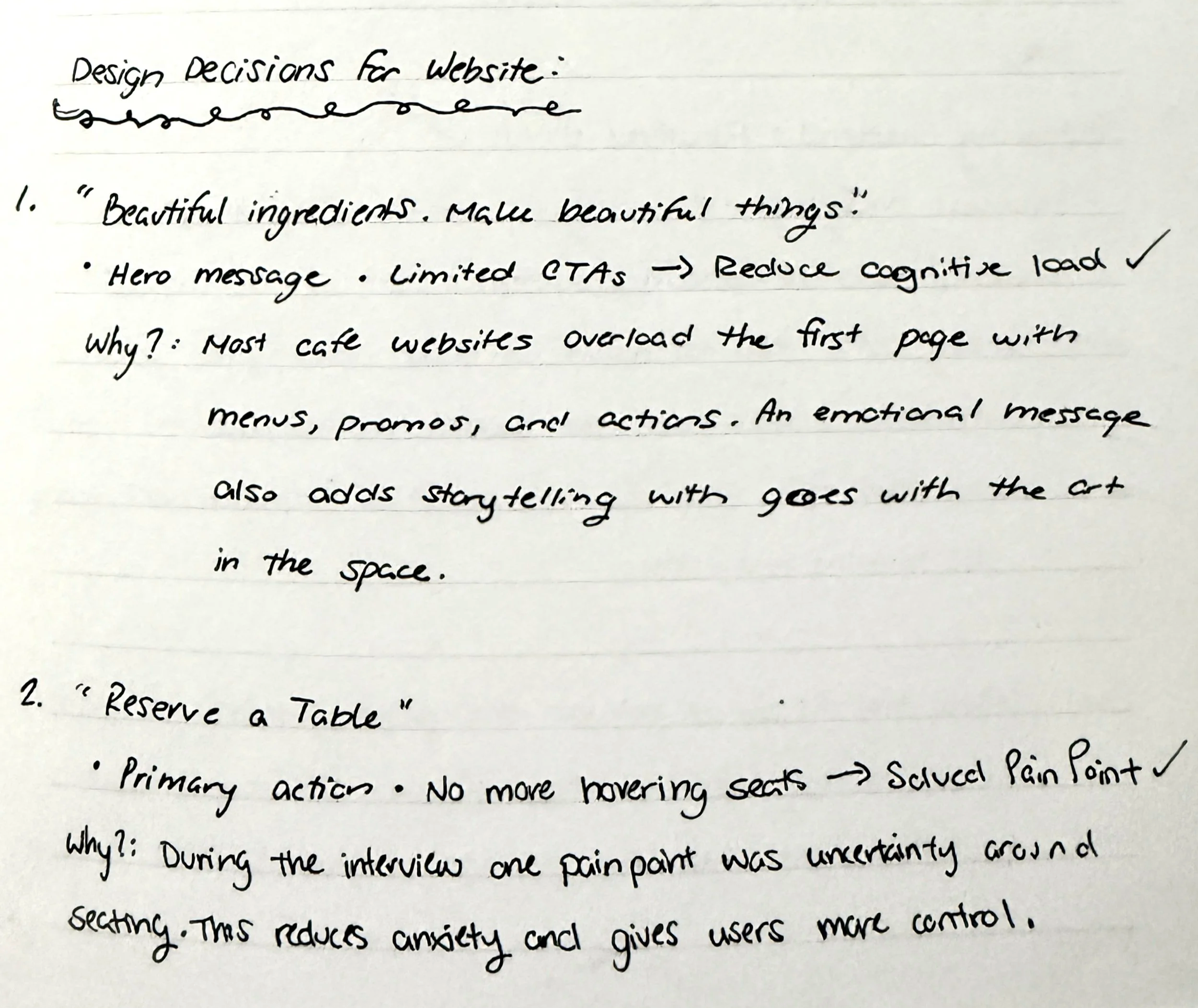
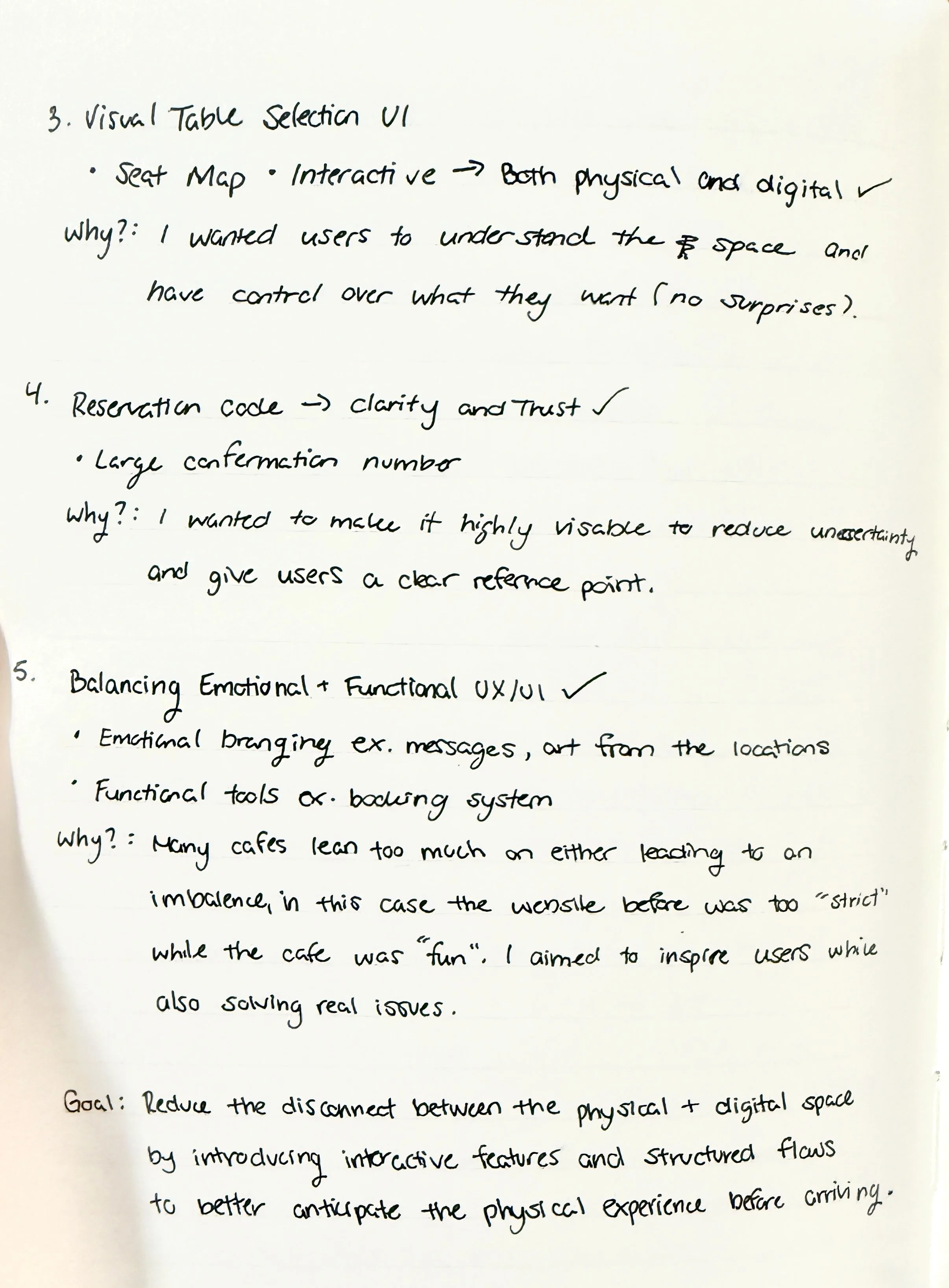
Design Decisions
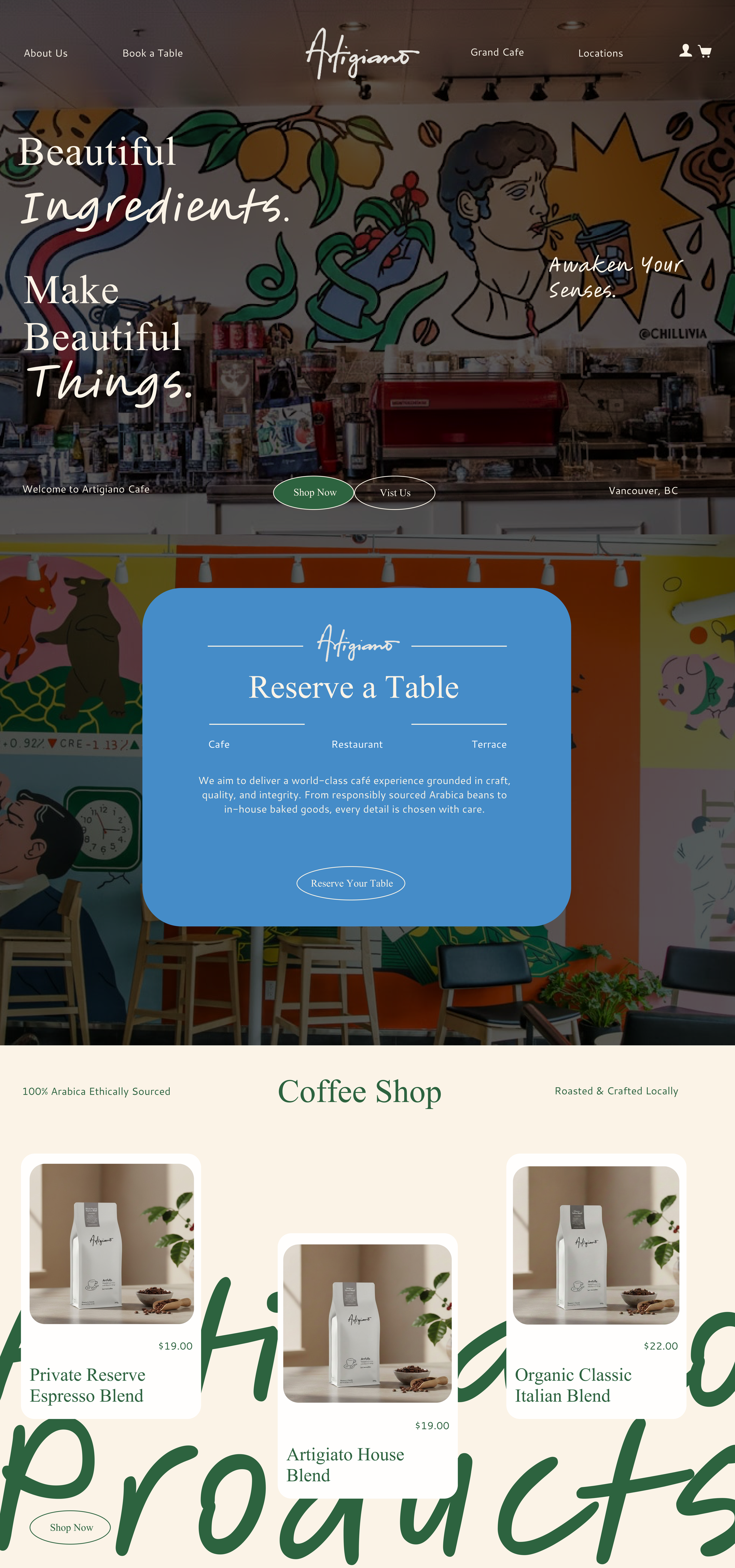
I designed the experience to balance clarity, functionality, and brand expression. Based on research around in-store friction, especially around seating and uncertainty, I prioritized a streamlined reservation flow with a visual table selection system to better connect the digital experience to the physical space. The layout is intentionally minimal and structured to reduce cognitive load while reflecting the café’s sense of craftsmanship. At the same time, I incorporated moments of exploration and brand storytelling so the site not only functions well but also captures the atmosphere and intent behind the café.
Visualization
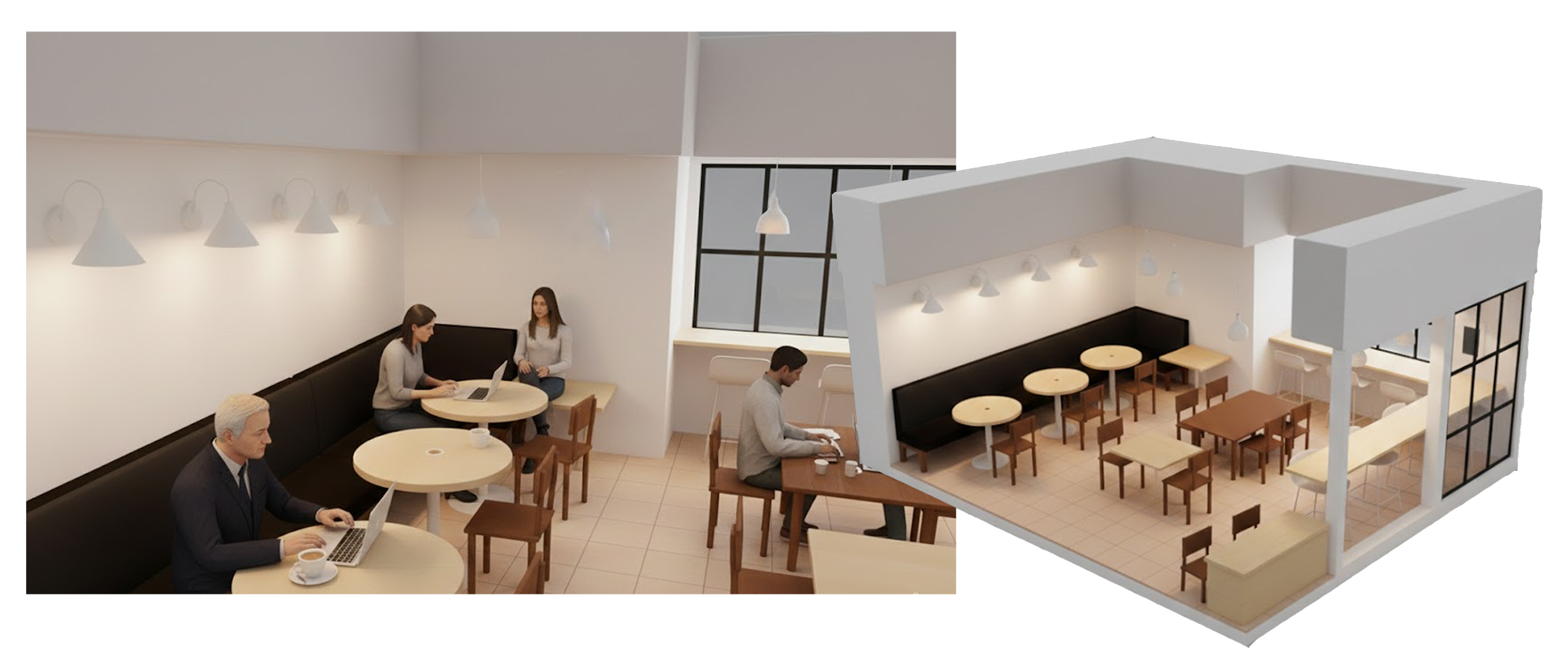
To better understand Artigiano’s interior and how users interact with the space, I created a 3D mockup of the café using Maya. This allowed me to explore table placement and user flow firsthand, working with the space to identify potential pain points. It was my first time using Maya, and I wanted to challenge myself with a new tool. The mockups also serve as a visual aid for the table booking system and could be used interactively on the website to help users navigate the café.
Wireframes
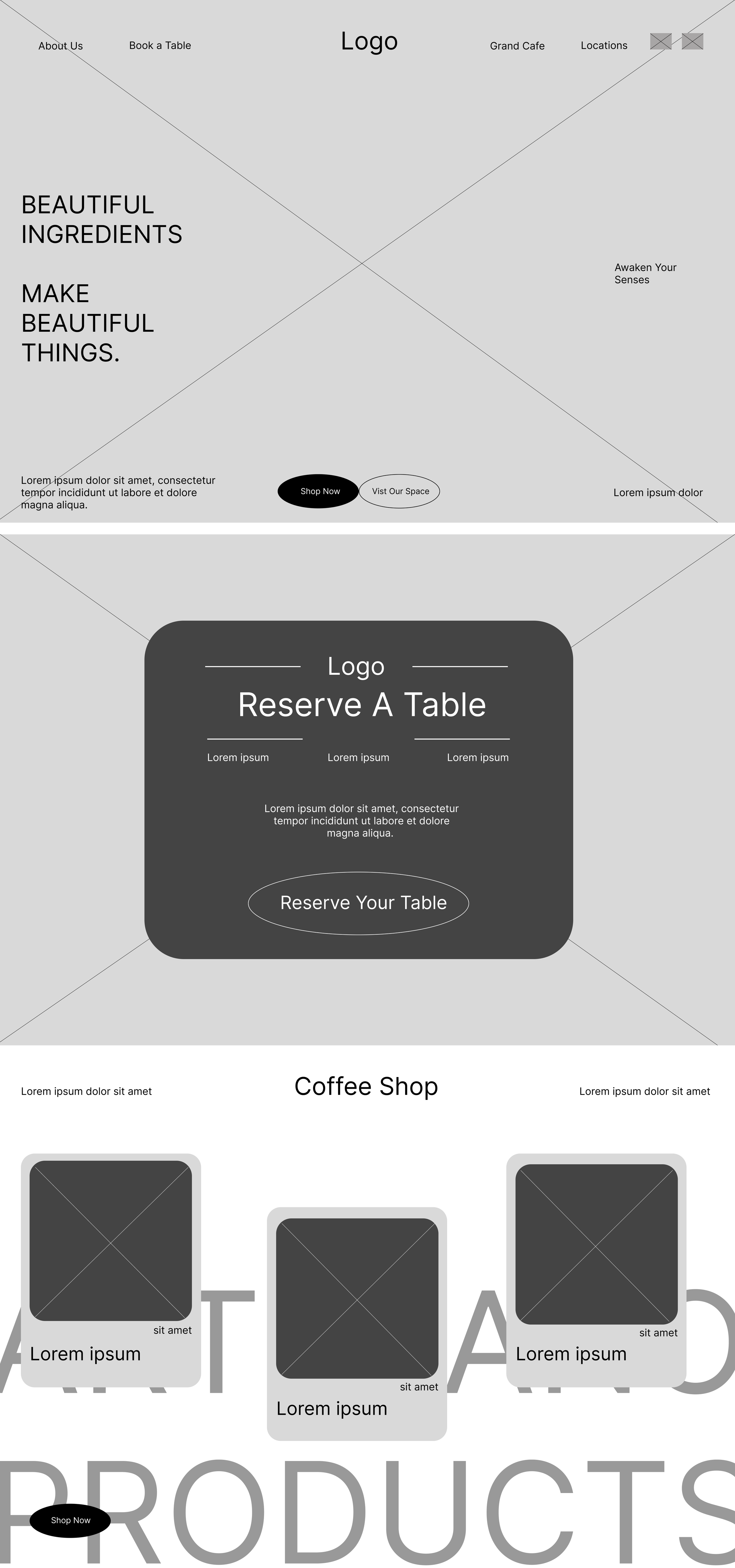
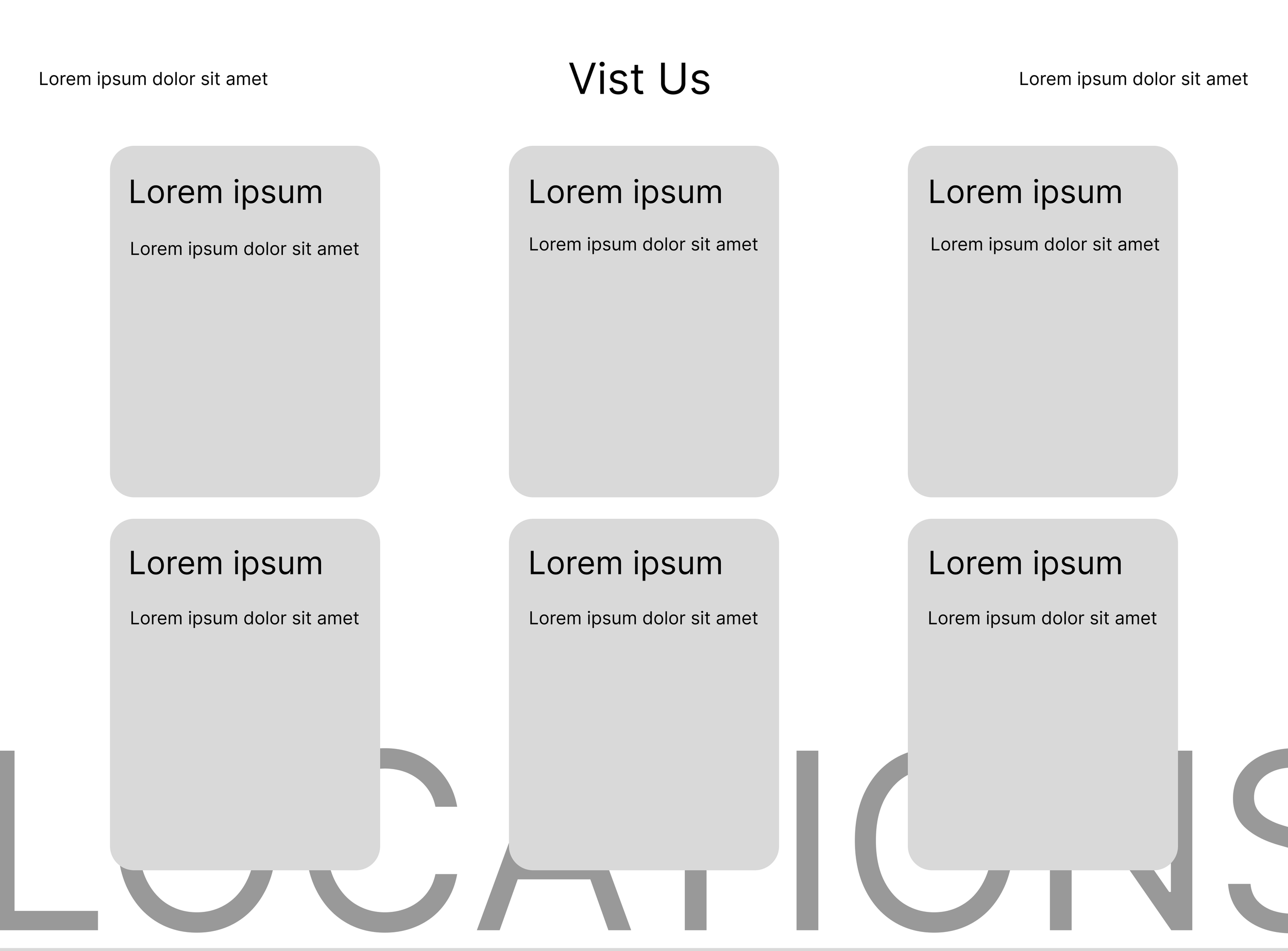
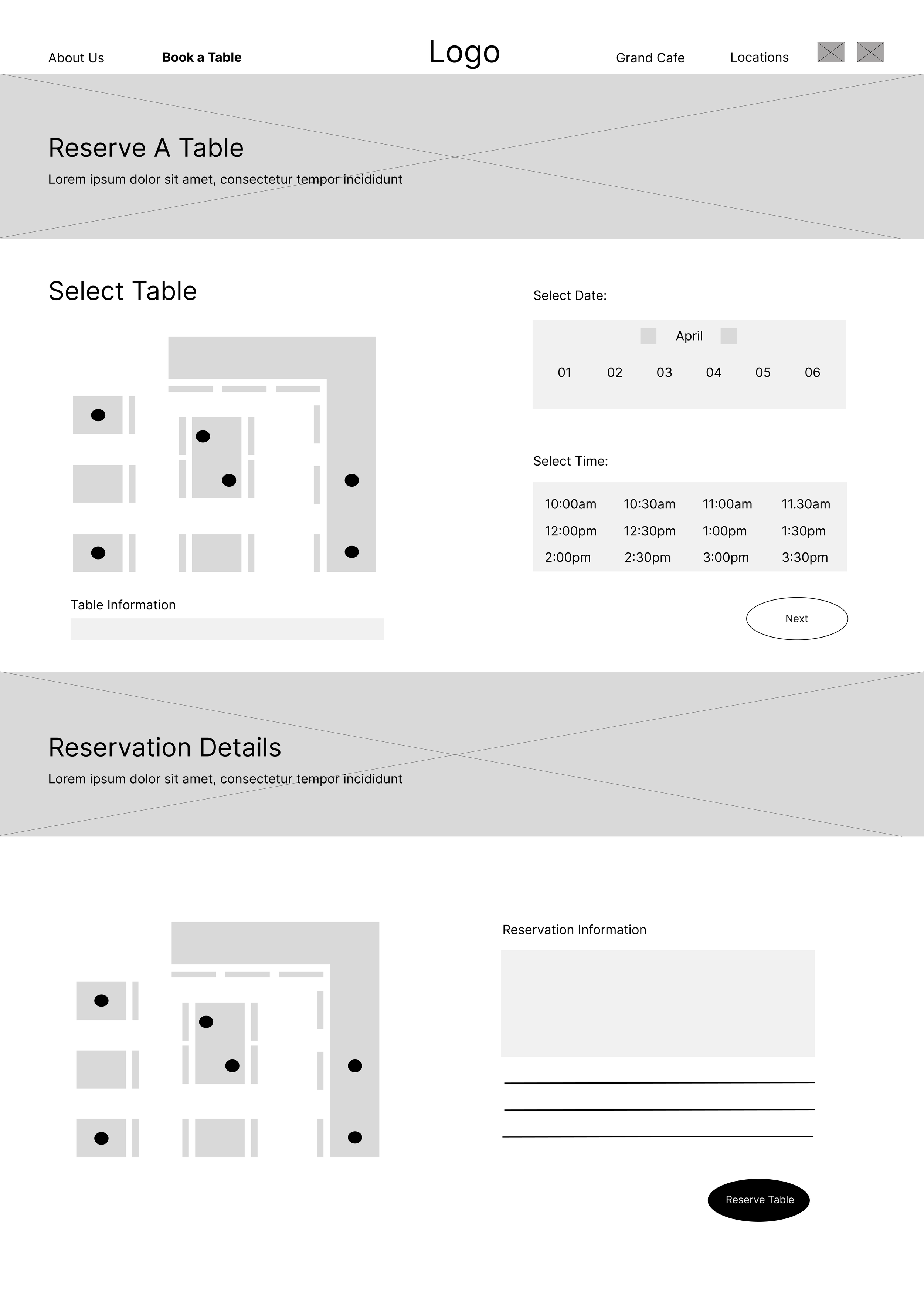
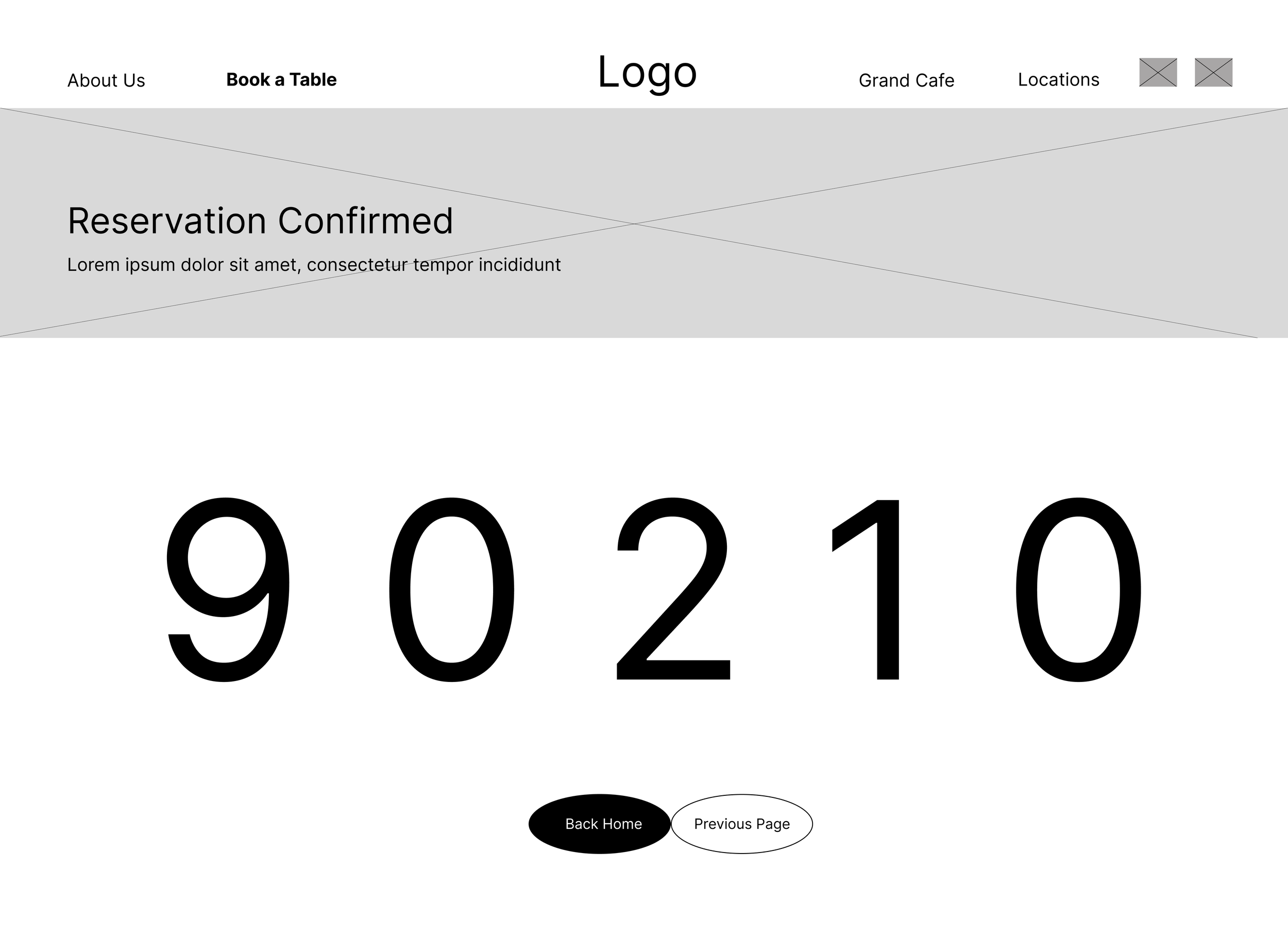
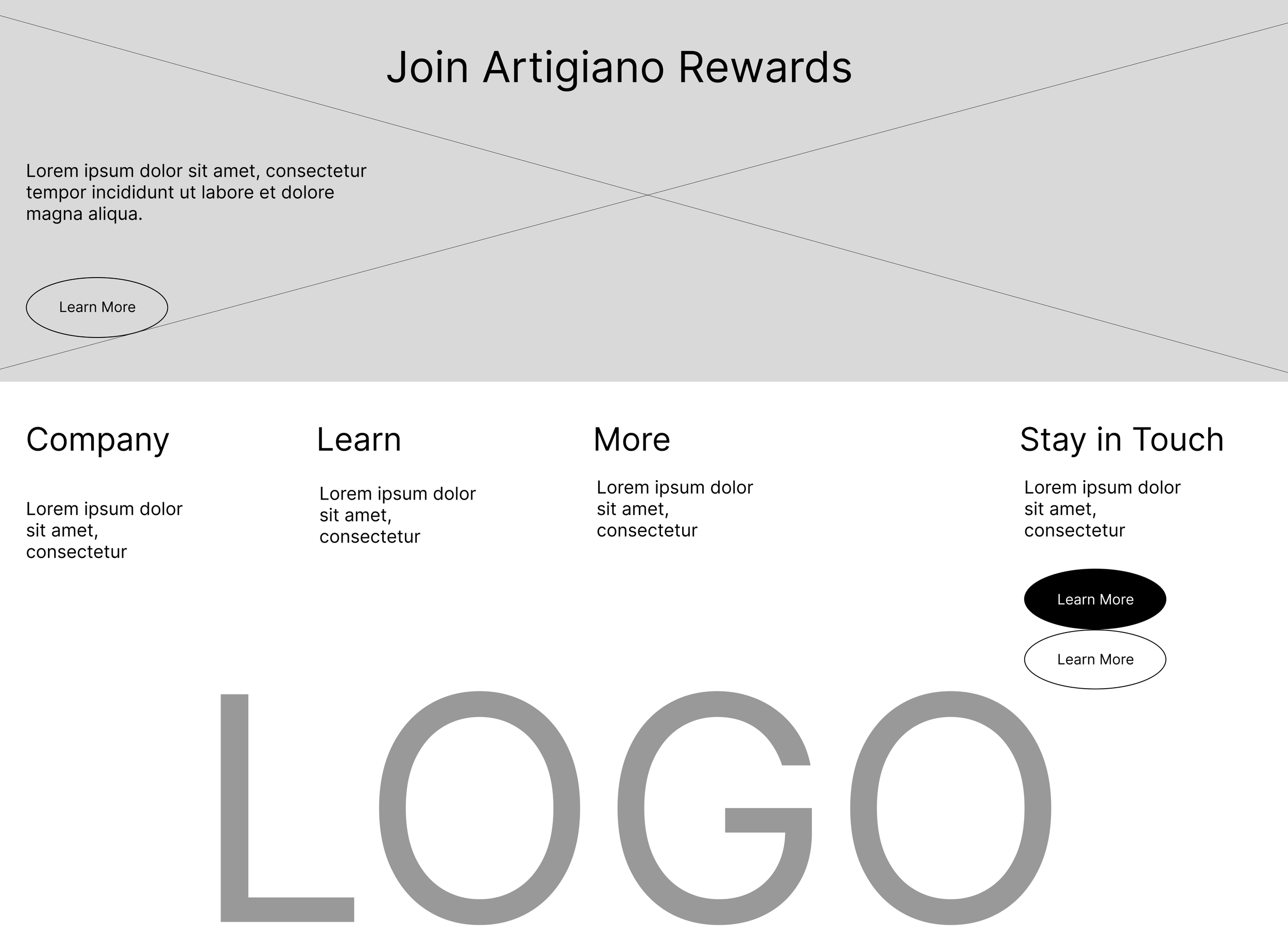
I used Artigiano’s existing website as inspiration and created wireframes in Figma to refine the design and layout. This ensured the new table booking feature felt seamless and aligned with the café’s current look and user experience.
Final Prototype
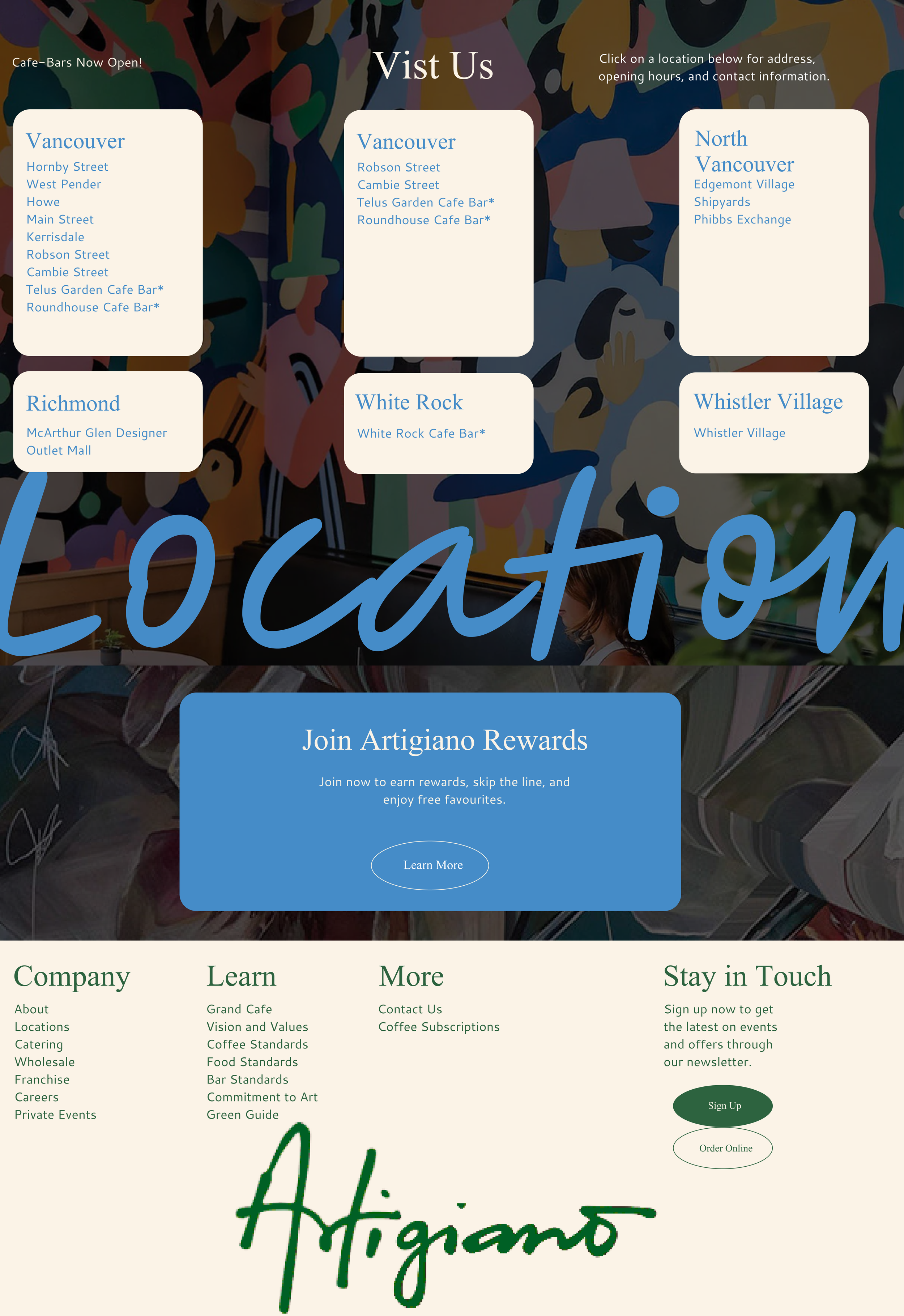
Following the wireframing stage, I redesigned the website by incorporating brand imagery, integrating icons, replacing placeholder text with finalized content, refining typography, and adding interactive elements across key user flows.
How Does it Work?
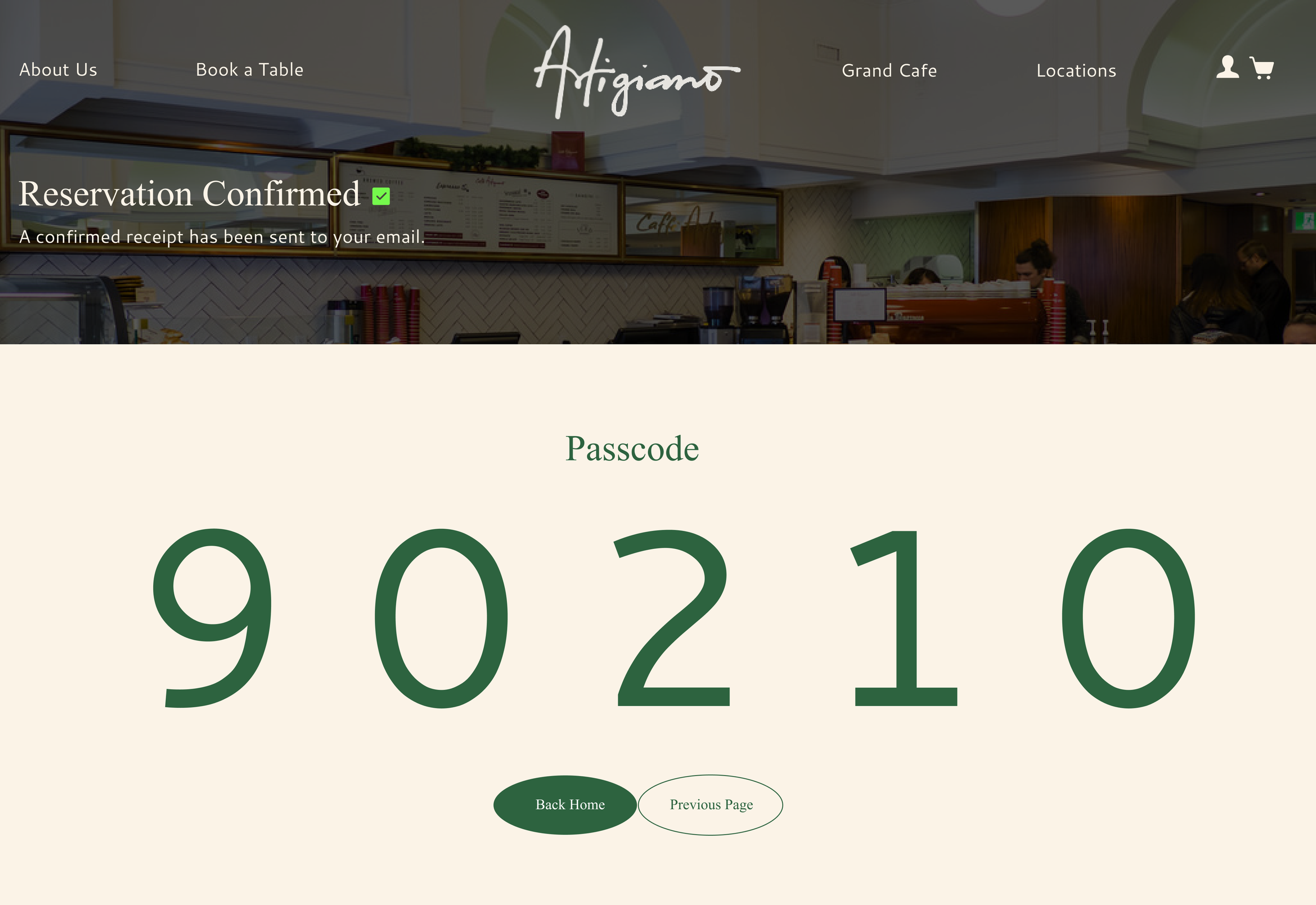
To make a reservation at Artigiano Café, users can visit the Artigiano website and navigate to the table booking feature. From there, they can view table availability and see details for each seating option. Users then select their preferred date and time, enter their contact information, and confirm the booking. Once completed, they receive a unique confirmation code to use for check-in upon arrival at the café.
Sign in Process
When a customer arrives at the cafe they will see a tablet at the table they reserved. This will signal to other customers that this table is occupied. Reservations are limited to a 10 minute grace period which after that time the reservation will automatically be cancelled. By this policy it will ensure that all customers have a fair chance to sit and enjoy the atmosphere of the cafe.
In order to use the table customers must enter the 5 digit code provided to them when they confirmed the reservation, by doing this it ensures that anyone who has not made a reservation cannot take a table that another customer has reserved.
RETROSPECTIVE
What I Learned
01 - Streamlining the Reservation Process for Clarity
I learned that setting limits (like the 4-hour max reservation) and clearly communicating them reduces user errors and frustration, improving the overall experience.
02 - Research Drives Empathy
Speaking directly with users helped me understand their expectations and frustrations, reinforcing that good UX isn’t just visual, it’s about designing for real human needs and behaviours.