Book Review: Letters to Milena By Franz Kafka
Reading Letters to Milena by Franz Kafka felt less like reading a book and more like secretly stepping into someone’s mind. His words carry this raw, almost intrusiveness, like you’re sitting with thoughts that were never meant to be yours. And yet that’s what makes it so interesting.
Kafka had already left an impression on me through The Metamorphosis. I was drawn to how dark and intriguing it was, but I remember feeling like I only understood it on the surface. I knew that if I really wanted to grasp his work, I needed to understand him as a person. This book does exactly that, with also an amazing love story.
It shows Kafka in his most vulnerable state, navigating his chronic illness, his restless mind, and his deep awareness of his own sensitivity. What surprised me is how he doesn’t try to escape any of it. He feels everything fully, even when it overwhelms him. There’s something both fearless and fragile in that.
Their relationship feels like the perfect example of right person, wrong time. She was married, there was distance between them, and Kafka himself was deteriorating. His love reads as intense, passionate, and at times almost desperate. And because we never get Milena’s letters, there’s this constant sense of imbalance. You’re left wondering what she felt, how deeply she loved him, or if this connection held the same weight for her.
That absence makes the story even stronger.
At times, his love feels beautiful and poetic. Other times to me, it felt tangled in loneliness and illness. It’s hard to separate where love ends and desperation begins, and maybe that’s the point. It feels real because it’s not clean or easily defined.
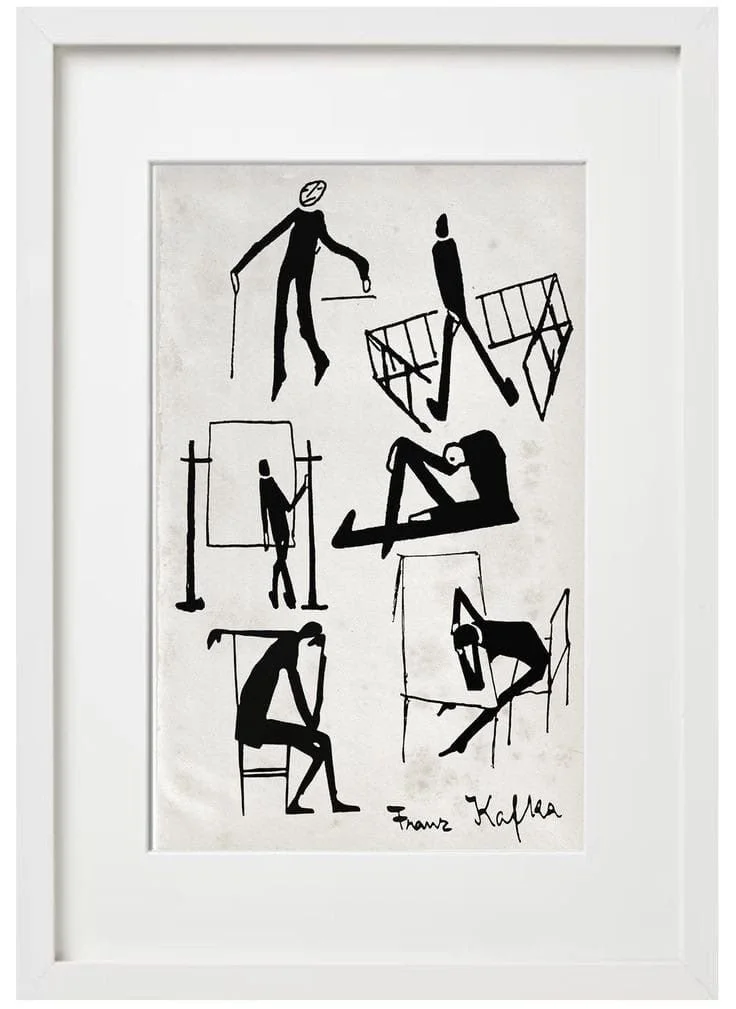
What also stayed with me, in a quieter way, were his sketches scattered throughout. They’re so simple, almost childlike at first glance, but they carry this strange emotional weight. It feels like another language he uses when words aren’t enough. There’s something deeply personal about them, like small visual echoes of everything he’s feeling but can’t fully articulate.
The book feels like a collection of confessions. Love, fear, guilt, longing, all laid out without restraint. Reading it almost felt like going through someone’s private diary, unsure if you should keep reading but unable to stop. I think what makes it even more powerful is that he wrote these letters believing only Milena would ever read them, which makes it feel almost wrong to be dissecting them now.
I’m usually a bit more lenient with books like this since they’re built from someone’s real thoughts and experiences, but this one doesn’t even need that. It just stands on its own. It doesn’t feel like a typical biography or memoir, it’s something much more personal than that.
If you struggle with classics, this is a surprisingly accessible place to start. It’s personal, emotional, and easier to connect with than more traditional works.
More than anything, it leaves you thinking about Kafka not just as a writer, but as a person. And after seeing so much of his inner world, it’s hard not to hope that he found some kind of peace. Below are some of my favourite quotes from the book, and what I think they mean.
“You are the knife I turn inside myself; that is love. That, my dear, is love.”
Come on have you ever heard something so amazing.
“In a way, you are poetry material; You are full of cloudy subtleties I am willing to spend a lifetime figuring out. Words burst in your essence and you carry their dust in the pores of your ethereal individuality.”
I think it means they see someone as really complex and almost poetic in the way they exist. Like not easy to fully understand, a bit mysterious, but in a beautiful way. The kind of person you could spend forever trying to figure out and still not fully reach the end of.
“I wish the world were ending tomorrow. Then I could take the next train, arrive at your doorstep in Vienna, and say: “Come with me, Milena. We are going to love each other without scruples or fear or restraint. Because the world is ending tomorrow.” Perhaps we don’t love unreasonably because we think we have time, or have to reckon with time. But what if we don't have time? Or what if time, as we know it, is irrelevant? Ah, if only the world were ending tomorrow. We could help each other very much.”
I think he’s saying that if time and consequences didn’t exist, they would just choose each other fully without holding back. Like all the fear, hesitation, and complications only exist because they think they have time or have to deal with reality. And if everything was ending, none of that would matter, they could just love each other freely and completely.
“Yours (now I'm even losing my name - it was getting shorter and shorter all the time and is now: Yours)”
He’s saying that he feels so consumed by his feelings that even his own identity is fading, he’s losing himself in the relationship or in his love for her, to the point that all that’s left is “Yours.”
“Do you know, darling? When you became involved with others you quite possibly stepped down a level or two, but If you become involved with me, you will be throwing yourself into the abyss. But I’m doing badly, I’m doing well, whichever you prefer.”
He’s being honest about how intense and chaotic being with him would be. It’s a little mad, but there’s something striking about how openly he expresses it.
“Milena, if a million loved you, I am one of them, and if one loved you, it was me, if no one loved you then know that I am dead.”
I might just have to quote the whole book…it’s so beautiful.